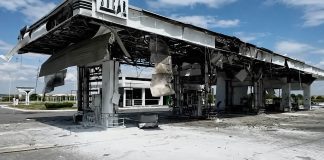
A ruling in Kazakhstan gives Ukraine’s state energy company a new enforcement route against Gazprom, turning a long-running gas transit dispute into a cross-border asset recovery case.
A court in Kazakhstan has allowed Ukraine’s state energy company Naftogaz to enforce the recovery of approximately $1.4 billion from Gazprom, marking a new stage in one of the most politically sensitive energy disputes to follow Russia’s full-scale invasion of Ukraine.
The Astana International Financial Centre Court recognised the arbitration award and granted permission for enforcement in Kazakhstan, Naftogaz said. The Ukrainian company described the decision as the first public foreign court ruling recognising and allowing enforcement of this award against Gazprom in the territory of another state.
The case concerns payment for the organisation of Russian gas transit through Ukraine under the 2019 Russia-Ukraine Gas Transit Agreement. Under that agreement, Naftogaz was required to organise the transit of natural gas through Ukrainian territory for Gazprom until the contract expired on January 1, 2025.
The dispute escalated after May 2022, when transit through the Sokhranivka entry point became impossible following Russia’s occupation of parts of eastern Ukraine. Naftogaz says it continued to provide transit services through the Sudzha entry point, but Gazprom refused to pay fully for the transportation services covered by the agreement. Naftogaz then initiated arbitration proceedings in Switzerland in September 2022 under the rules of the International Chamber of Commerce.
In June 2025, a Swiss-seated arbitral tribunal found Gazprom liable for failing to meet its obligations and ordered the Russian company to pay the outstanding debt for gas transportation organisation services, as well as interest and arbitration costs. In January 2026, the Swiss Federal Tribunal dismissed Gazprom’s appeal, confirming the validity of the award.
The Kazakhstan ruling matters because arbitration awards are only as useful as the ability to enforce them. Gazprom has not voluntarily complied with the award, according to Naftogaz, leaving the Ukrainian company to pursue recovery across multiple jurisdictions. The Kazakh decision gives Naftogaz a recognised legal basis to seek assets or other enforceable value connected to Gazprom within Kazakhstan’s jurisdiction.
The development also has significance beyond the amount at stake. Gazprom has long been one of Russia’s central instruments of energy influence in Europe and the former Soviet space. The company’s legal exposure has grown as commercial partners, state-owned firms and European companies have pursued claims linked to interrupted supplies, contract disputes and the wider disruption caused by Russia’s war against Ukraine.
In March, Naftogaz said it had won a $1.4 billion gas transportation case after Switzerland’s highest court rejected Gazprom’s attempt to overturn the earlier arbitral award. At the time, Naftogaz said the award covered debt for gas transportation services through Ukraine, along with interest and additional costs.
The Russian side has pursued its own legal countermeasures. In April 2025, a Russian court increased a penalty against Naftogaz to $1.3 billion over the Ukrainian company’s use of international arbitration in the gas transit dispute. That ruling reflected Moscow’s wider effort to move disputes into Russian courts and limit the effect of foreign arbitration proceedings.
The end of Russian gas transit through Ukraine in January 2025 has already changed Europe’s energy map. For decades, Ukraine was a central corridor for Russian pipeline gas to European markets. The termination of the five-year transit agreement removed one of the last major commercial links between Gazprom and Ukraine, while also reducing Moscow’s direct pipeline role in European gas supply.
For Kyiv, the Kazakhstan decision is part of a broader legal strategy. Naftogaz has separately pursued compensation for assets seized following Russia’s annexation of Crimea. In April 2025, a Paris court recognised an international arbitration ruling linked to a $5 billion award over Naftogaz assets in Crimea, allowing the company to begin enforcement proceedings in France.
These cases differ in legal basis, but they point in the same direction: Ukrainian state entities are increasingly using foreign courts to convert arbitration awards into enforceable claims against Russian state-linked assets. That process is likely to be slow, contested and dependent on the availability of recoverable assets in each jurisdiction. However, each recognition decision creates additional legal pressure on Russian companies and state-linked entities operating abroad.
Kazakhstan is a notable venue because of its economic links with Russia and its own position in the Eurasian energy system. A decision by a Kazakh court to recognise and permit enforcement of the award does not mean immediate recovery of the full sum. It does, however, show that Gazprom’s legal exposure can extend into jurisdictions beyond the EU and traditional Western enforcement venues.
For Naftogaz, the ruling gives practical momentum to a recovery campaign that had already survived Gazprom’s challenge in Switzerland. For Gazprom, it adds another front to a growing set of international claims arising from the breakdown of its pre-war commercial model.
The wider significance is that Russia’s energy disputes are no longer confined to gas supply contracts or transit routes. They are becoming asset recovery battles fought through arbitration, domestic courts and enforcement proceedings across multiple jurisdictions. For Ukraine, that legal campaign is now part of the broader effort to impose financial costs on Russian state-linked companies long after the physical gas flows through Ukraine have stopped.