Donald Trump says a US-Iran agreement could be signed within days, but competing accounts from Tehran, mediators and Washington suggest the hardest questions may only be deferred.
Donald Trump has insisted that a deal with Iran is ready to be signed, raising hopes of a diplomatic breakthrough while leaving Europe to assess whether the emerging agreement can stabilise the Gulf, reopen the Strait of Hormuz and contain Tehran’s nuclear programme.
The US president said the agreement could be signed as early as Sunday, presenting it as a major step towards ending the conflict with Iran and preventing Tehran from acquiring nuclear weapons. According to Associated Press reporting, Pakistani Prime Minister Shehbaz Sharif has also suggested that the text could be signed electronically within 24 hours.
Yet the diplomatic picture remains less settled than Trump’s public confidence suggests. Iran’s foreign ministry has indicated that more time may be needed, while key questions around nuclear stockpiles, sanctions relief, verification and Lebanon remain unresolved.
For Europe, the possible agreement is both a relief and a warning. A credible deal could reduce energy-market pressure, reopen vital shipping routes and lower the risk of a wider Middle East war. But if the terms are shaped primarily by Washington, Tehran and regional mediators, European governments may once again find themselves reacting to a major security settlement rather than helping to design it.
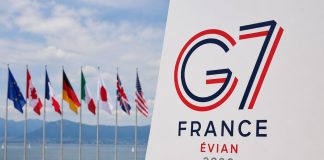
The timing also matters for the G7, which was already opening under pressure from the Iran war, Ukraine and Trump’s terms. The latest claims sharpen that pressure. Leaders arriving at the summit may now face the prospect of endorsing, questioning or adjusting to a US-Iran deal whose political impact could stretch far beyond the Gulf.
Hormuz Is the Immediate Test
The Strait of Hormuz remains the most urgent global concern. The waterway is one of the world’s most important energy chokepoints, and disruption there has already raised fears over oil and gas flows, shipping insurance and wider economic instability.
AP reports that a possible deal could involve reopening Hormuz and beginning a 60-day period focused on Iran’s nuclear programme. Axios has also reported that the United States and Iran are expected to electronically sign a memorandum of understanding extending a ceasefire, reopening the strait and launching nuclear talks.
That sequence would give Trump a diplomatic success to present before the G7. It would also give markets a short-term signal that escalation may be receding. But reopening Hormuz is not the same as securing it. Questions remain over enforcement, shipping guarantees, Iranian tolls or controls, and whether US or allied naval forces would continue operations in the area.
For European economies, the difference matters. A temporary reopening may calm prices. A durable maritime-security framework would be more significant.
The Nuclear Question Is Not Settled
Trump has said Iran no longer wants a nuclear weapon. That claim will be tested against the detail of any agreement.
The central issue is whether the deal actually resolves Iran’s nuclear programme or merely creates a negotiating window. AP reports that the agreement is expected to initiate a 60-day period dealing with Iran’s nuclear programme, including questions around highly enriched uranium. Other reports suggest that the most difficult technical issues may be pushed into follow-up talks.
That would make the agreement less a final settlement than a diplomatic pause. It may stop the immediate conflict, but it would leave Europe, Israel and regional states watching closely for verification arrangements and timelines.
For France, Germany and the wider EU, this is familiar terrain. Europe played a central role in the 2015 nuclear agreement, but its influence has diminished since the US withdrawal from that deal under Trump’s first administration. A new US-led framework could confirm that Europe’s role in Iran diplomacy has shrunk, even though the consequences of failure would directly affect European security.
Israel and Lebanon Could Complicate the Deal
The possible agreement also appears entangled with wider regional conflict. Iranian officials have linked any end to war with conditions across multiple fronts, including Lebanon. Israel, however, remains deeply sceptical of arrangements that could leave Iran’s nuclear or proxy capabilities intact.
This is where the deal could face its first serious test. A US-Iran text may reduce direct confrontation between Washington and Tehran, but it will not automatically settle Israel’s security demands, Hezbollah’s position, or the future of Israeli operations in Lebanon.
If Israel rejects the terms or continues military action it considers necessary, the agreement could enter force under immediate strain. That would leave Europe in the familiar position of supporting de-escalation while worrying that the diplomatic architecture is too narrow to hold.
A Deal Europe Needs, But Did Not Shape
Trump’s insistence that the agreement will be signed reflects his preference for dramatic diplomatic announcements. But Europe’s interest lies in the mechanics: whether Hormuz stays open, whether nuclear limits are enforceable, whether sanctions relief is phased, and whether the deal reduces or merely relocates regional risk.
The Guardian reported that a preliminary peace deal could be signed within days, citing the United States, Iran and mediators. But preliminary is the key word. A framework can end the immediate crisis while leaving the most difficult questions to later talks.
The agreement could still become a meaningful diplomatic opening. If it produces a verified ceasefire, maritime stability and serious nuclear negotiations, it would be a major achievement. If it proves to be a loosely worded pause, it may simply postpone the next crisis.
For Europe, the lesson is clear. The continent has a direct stake in the outcome of US-Iran diplomacy: energy security, nuclear non-proliferation, regional stability and transatlantic relations all run through this file.
But as Trump declares that a deal is ready to be signed, Europe is again being reminded that it may have to live with terms negotiated elsewhere.