In recent years, European far-right political parties have increasingly been linked to Russian support, both financial and ideological.
This relationship has raised concerns about the integrity of European democracies and the potential influence of external actors on domestic politics.
One of the most prominent examples is that of France’s Rassemblement National (RN), formerly known as the Front National. In 2014, the party secured a €9 million loan from a Russian bank, citing difficulties in obtaining funds from French institutions due to its controversial reputation.
This financial connection has led to scrutiny over the party’s stance on Russia, especially regarding its support for Russia’s annexation of Crimea. A French parliamentary report highlighted RN’s alignment with Russian rhetoric, noting that party leader Marine Le Pen referred to Crimea as “Russian,” echoing Kremlin narratives.
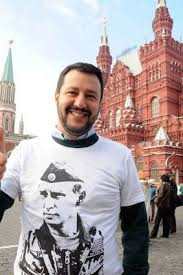
Similarly, Italy’s Lega party, under the leadership of Matteo Salvini, has faced allegations of attempting to secure funding from Russia.
Investigations revealed discussions about diverting profits from oil deals to finance Lega’s 2019 European Parliament election campaign. Although concrete evidence of the deal’s execution is lacking, the allegations underscore the perceived closeness between Lega and Russian interests.
Austria’s Freedom Party (FPÖ) also exemplifies these connections. In 2019, a scandal known as the “Ibiza Affair” emerged, where then-party leader Heinz-Christian Strache was filmed discussing potential deals with individuals posing as Russian oligarchs. This incident led to the collapse of Austria’s ruling coalition and highlighted the susceptibility of European far-right parties to Russian influence.
Ideological Alignment and Support
Beyond financial ties, there’s a notable ideological alignment between Russia and various European far-right parties. This convergence is evident in shared stances on issues like nationalism, anti-immigration policies, and skepticism towards the European Union.
Germany’s Alternative for Germany (AfD) party has exhibited pro-Russian sentiments, with parts of the party supporting Russia’s foreign policy. German domestic intelligence has reported that Russia attempts to destabilize Germany’s democratic system, with AfD members allegedly maintaining close ties with Russian politicians and receiving financial benefits.
In Romania, the rise of Călin Georgescu, a hard-right, pro-Russia populist, underscores the ideological synergy between certain European far-right figures and Russian interests. Georgescu’s anti-globalisation, anti-NATO, and Eurosceptic views resonate with Kremlin narratives, raising concerns about potential election interference by Russia.
Media Influence and Propaganda
Russia’s strategy extends beyond direct financial support, encompassing media influence to bolster far-right parties. The establishment of pro-Kremlin media outlets, such as the Prague-based Voice of Europe, exemplifies this approach. Investigations revealed that this outlet funneled significant sums to far-right politicians across Europe to disseminate Kremlin propaganda, aiming to sow division within the European Union and strengthen pro-Russian candidates.
Implications for European Democracies
The entanglement of European far-right parties with Russian support poses significant challenges to the continent’s democratic institutions. Financial dependencies can lead to policy positions that favour Russian interests, potentially compromising national sovereignty. Moreover, the ideological alignment on issues like anti-immigration and Euroscepticism can exacerbate divisions within European societies, undermining unity and stability.
Intelligence agencies across Europe have expressed concerns about these developments. For instance, Austria’s longstanding ties with Russia, rooted in its post-war neutrality, have led to apprehensions among Western allies regarding intelligence-sharing, especially if pro-Russia far-right parties gain governmental influence.
The nexus between European far-right political parties and Russian support is multifaceted, involving financial aid, ideological alignment, and media influence. This relationship not only threatens the integrity of individual nations’ political systems but also poses a broader risk to European unity and democratic values.
As these connections become more evident, it is imperative for European democracies to remain vigilant, ensuring that external influences do not compromise their sovereignty or the principles upon which they are founded.
Image courtesy of EU Today.