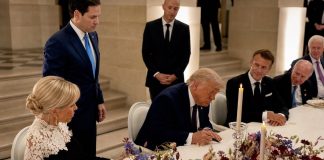
Malta, that most compact of European polities, rarely does drama by halves. Yet even by its own standards the decision of Prime Minister Robert Abela to summon an election a full year ahead of schedule carries a certain theatrical flourish — one sharpened by the distant thunder of war in the Middle East.
In a televised address that was equal parts reassurance and calculation, Abela announced that voters would go to the polls on May 30th. The justification was couched in the language of stability. With global conditions, as he put it, entering a “crucial” phase, Malta required a government unencumbered by political distraction.
Such arguments are seldom made in a vacuum. Malta’s governing Labour Party enjoys a commanding parliamentary majority and, more importantly, a comfortable lead in opinion polls. The prospect of a record fourth consecutive term is not merely plausible but widely anticipated. In that context, the timing of the election appears less a leap into uncertainty than a carefully judged consolidation of advantage.
Yet to dismiss the move as mere opportunism would be to overlook the wider anxieties shaping European politics. The conflict involving Iran — with its attendant pressures on energy markets, shipping routes and aviation fuel — has introduced a fresh layer of volatility into an already fragile global economy. For an island state whose prosperity depends heavily on imports and tourism, such tremors are felt with particular acuity.
Abela has sought to turn that vulnerability into a political asset. Malta, he insists, is well prepared: public finances are sound, inflation remains subdued, and unemployment is effectively negligible. The figures lend weight to his claim. A budget deficit of roughly 2.2 per cent of GDP and government debt hovering around the mid-40s would be the envy of many larger European economies.
This economic narrative — prudent stewardship in uncertain times — lies at the heart of Labour’s appeal. It is also, however, a narrative that may yet be tested. Rising fuel costs threaten to push up prices in a country heavily reliant on imported goods, while any disruption to air travel risks undermining the tourism sector that underpins much of Malta’s growth.
Against this backdrop, the opposition Nationalist Party enters the contest under relatively new leadership. Alex Borg, elevated to the role only months ago, faces the unenviable task of narrowing what has become a historically wide gap between Malta’s two dominant parties.
Since 1966, Maltese politics has effectively been a duopoly, with Labour and the Nationalists alternating in power. That duopoly endures, but the balance has tilted decisively in Labour’s favour.
Elections in Malta are rarely low-key affairs. Turnout routinely approaches 90 per cent, a level of civic engagement that would be remarkable elsewhere but is almost customary on the island. This intensity reflects not only political loyalty but the intimate scale of Maltese society, where politics is as much a social as a national concern.
What, then, is truly at stake in this early election? At one level, very little appears likely to change. Labour is poised to win; Abela is expected to remain in office. Yet elections are not merely about outcomes; they are about mandates. By going early, Abela seeks to secure a renewed endorsement before external pressures — economic or geopolitical — have time to erode his government’s standing.
There is, too, a broader European dimension. Across the continent, governments are grappling with the interplay between domestic stability and international turbulence. Malta’s decision to head to the polls ahead of schedule is, in that sense, emblematic of a wider instinct: to lock in political capital before events beyond national control begin to dictate the terms of debate.
Whether that instinct proves prescient or premature will become clear soon enough. For now, Malta stands on the cusp of an election framed not by scandal or crisis at home, but by uncertainty abroad. It is a reminder that even the smallest states cannot insulate themselves from the currents of global politics — only attempt, as Abela has done, to navigate them on their own timetable.
Main Image: Media Relations Office, Office of the Prime Minister of Malta