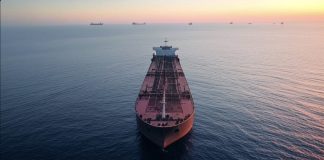
At least four oil and gas tankers reversed course after renewed attacks near the Strait of Hormuz, showing that physical access to the Gulf chokepoint can remain open while commercial confidence, insurance and European energy security deteriorate.
At least four oil and gas tankers have turned back from the Strait of Hormuz after renewed attacks on commercial vessels, reviving the risk that insecurity in the Gulf will tighten energy supply and feed inflation far beyond the region.
Ship-tracking data from LSEG and Kpler showed vessels reversing course rather than continuing through the strait. Among them was an Indian-flagged tanker carrying about two million barrels of Kuwaiti crude, which turned around off Oman, according to reporting based on the tracking data.
The movement does not amount to a formal closure. It is nevertheless an operational warning: shipowners and masters are responding to the threat environment before governments or markets can declare the route safe.
Open water, reduced confidence
The Strait of Hormuz carries a large share of internationally traded oil and liquefied natural gas. A complete blockade would be an extreme event, but disruption does not need to reach that threshold to impose costs.
Tankers may wait, turn back, sail without public tracking, demand security assurances or accept passage only at higher charter and insurance rates. Each response delays cargoes and makes supply less predictable.
EU Global recently reported that oil flows had resumed while some tankers switched off tracking systems. The latest reversals deepen that contradiction. Cargo may continue moving through the waterway, yet the behaviour of individual vessels shows that normal commercial passage has not returned.
This distinction matters because financial markets often react to diplomatic announcements faster than shipping operations can adjust. An oil-price fall can suggest relief while crews, owners and insurers still treat the corridor as a war-risk zone.
Europe’s indirect exposure is direct enough
Europe does not need to receive every Gulf cargo to feel the effect. Oil is globally traded, so reduced Gulf availability forces Asian and European buyers to compete for Atlantic Basin supply. Europe also depends on LNG markets in which Qatari cargoes influence prices even when they are destined for Asia.
Fertiliser production adds another channel. Nitrogen fertilisers depend heavily on natural gas, while Gulf producers and shipping routes affect global availability. A prolonged disruption can therefore reach European farms through higher input costs before it appears fully in headline inflation.
Insurance costs can persist after immediate attacks stop. Underwriters assess the probability of further violence, rescue conditions and naval protection. Shipowners may pass those premiums to charterers, and the cost then moves through refiners, utilities, manufacturers and consumers.
Naval protection cannot remove commercial judgment
Governments can deploy warships, improve intelligence sharing and organise escorted transit. International bodies can help vessels trapped by disruption, as occurred under the IMO evacuation scheme reported in June.
Those measures reduce risk; they do not eliminate the master’s responsibility for a ship and crew. A multinational naval presence also creates escalation questions. Escorts must distinguish attack preparations from ambiguous movement in congested waters, while adversaries may use drones, mines or deniable proxies that complicate attribution.
The immediate test is whether the turnarounds remain isolated or become a wider pattern. Persistent reversals would tighten vessel availability, raise freight costs and undermine claims that the route has normalised. A return to ordinary passage would require not merely fewer attacks, but enough confidence for commercial operators to stop behaving defensively.
For Europe, the lesson is uncomfortable but familiar. Energy security is shaped not only by pipelines, storage and contracts, but by decisions taken aboard individual ships at a distant chokepoint. Four tankers turning back can be an early signal of a much larger economic risk.