• WORLD
    • Africa
    • Americas
    • Asia
    • Europe
    • Middle East
    • Oceania
  • Policy
    • EU Policy
    • EU-Specific Focus
    • International Relations
    • National Policy
  • Economics & Business
    • Digital Economy
    • Energy
    • Finance
    • Global Markets
    • Sustainable Business
    • Trade
  • Human Rights
    • Civil Liberties
    • Education
    • Gender Rights
    • Health
    • Migration
  • Environment
    • Biodiversity
    • Climate Policy
    • Conservation
    • Environmental Justice
    • Renewable Energy
  • Science & Technology
    • AI & Robotics
    • Health Tech
    • Innovations
    • Space
    • Technology
  • Culture
    • Arts
    • Heritage
    • Language
    • Religion
    • Sports
  • Spotlight
    • Key Leaders
    • Major Events
    • New Initiatives
Search
EU Global News
Menu
EU Global News

EU Global News

  • WORLD
  • Policy
  • Economics & Business
  • Human Rights
  • Environment
  • Science & Technology
  • Culture
  • Spotlight
EU Global News
Search
  • WORLD
    • EuropeAmericasAfricaAsiaOceaniaMiddle East

      Iran’s Hormuz Demand Keeps Energy Risk Alive Despite Lower Oil Prices

      July 2, 2026

      German Nord Stream Indictment Reopens Europe’s Most Sensitive Sabotage Case

      July 2, 2026

      Russia turns to Indian petrol as refinery strikes force Moscow into fuel imports

      July 2, 2026

      EU Tariff Concessions to Washington Take Effect With a Suspension Lever Intact

      July 1, 2026

      EDF’s $4.2bn Renewables Sale Reveals the Cost of France’s Nuclear Programme

      July 1, 2026
  • Policy
    • EU PolicyNational PolicyInternational RelationsEU-Specific Focus

      Venezuela Quake Response Tests Europe’s Civil-Protection Reach

      June 30, 2026

      Brussels-China Trade Talks Test EU Resolve on Rare Earths and Market Access

      June 29, 2026

      India Presses EU Over Scrap-Export Curbs Before Trade Deal Takes Effect

      June 29, 2026

      Vučić Resignation Pledge Moves Serbia’s Protest Crisis Into an Election Struggle

      June 28, 2026

      Bolivia Ends 15-Year Dollar Peg as Currency Reform Tests Its Lithium Ambitions

      June 28, 2026
  • Economics & Business
    • Global MarketsTradeEnergyFinanceSustainable BusinessDigital Economy

      Iran’s Hormuz Demand Keeps Energy Risk Alive Despite Lower Oil Prices

      July 2, 2026

      German Nord Stream Indictment Reopens Europe’s Most Sensitive Sabotage Case

      July 2, 2026

      Russia turns to Indian petrol as refinery strikes force Moscow into fuel imports

      July 2, 2026

      EU Tariff Concessions to Washington Take Effect With a Suspension Lever Intact

      July 1, 2026

      CMA CGM Nears $1.4bn FedEx Logistics Deal in US Expansion Push

      July 1, 2026
  • Human Rights
    • Gender RightsMigrationCivil LibertiesHealthEducation

      Venezuela Quake Response Tests Europe’s Civil-Protection Reach

      June 30, 2026

      Ukraine-Russia Prisoner Exchange Keeps a Narrow Channel Open During Escalation

      June 27, 2026

      Brussels Extends Lifeline to Millions Fleeing Ukraine Conflict

      June 26, 2026

      Gaza’s Summer Heat Turns Polluted Shoreline Into a Humanitarian Risk

      June 23, 2026

      Congo’s Battle Against Ebola Shows the Importance of Swift Global Health Action

      June 23, 2026
  • Environment
    • Climate PolicyRenewable EnergyConservationEnvironmental JusticeBiodiversity

      Beyond Climate Change: Europe’s Ecosystems Face a Reckoning

      June 27, 2026

      Venezuela’s Darkest Hour: A Nation United in Grief After Catastrophic Earthquakes

      June 26, 2026

      Cheap solar panels show Europe’s energy-security debate has reached household level

      June 21, 2026

      Sydney Beachgoers & Surfers Return After Shark Attack

      June 15, 2026

      Norway Presses EU to Recast Arctic Gas as a Security Asset

      June 12, 2026
  • Science & Technology
    • TechnologyInnovationsAI & RoboticsSpaceHealth Tech

      Alibaba Lawsuit Turns US-China Security Blacklist Into Legal Fight

      June 24, 2026

      Congo’s Battle Against Ebola Shows the Importance of Swift Global Health Action

      June 23, 2026

      EU-South Korea Digital Pact Shows Brussels Looking Beyond US-China Trade Friction

      June 11, 2026

      Italian Astronaut Picked for Artemis III as Europe Gains Place in NASA Moon Architecture

      June 10, 2026

      South Africa Battery-Minerals Plan Points to New Competition Over EV Supply Chains

      June 10, 2026
  • Culture
    • ArtsHeritageReligionLanguageSports

      China’s foie gras boom threatens one of France’s most treasured culinary emblems

      June 20, 2026

      Kyiv Lavra Repairs Could Take Two Years After Russian Strike

      June 17, 2026

      Pauline Hanson Reopens Australia’s Old Debate on Identity and Immigration

      June 17, 2026

      Sydney Beachgoers & Surfers Return After Shark Attack

      June 15, 2026

      SBU Says Russian Geran-2 Drone Hit Kyiv-Pechersk Lavra

      June 15, 2026
  • Spotlight
    • Key LeadersMajor EventsNew Initiatives

      Corruption Verdict Sends Shockwaves Through Spain’s Ruling Party

      June 22, 2026

      G7 Debt Pledge Signals Shift From Aid Language to Investment Discipline

      June 18, 2026

      G7 Critical Minerals Plan Exposes US–European Split Over How to Counter China

      June 15, 2026

      Keir Starmer’s Long Goodbye

      June 13, 2026

      G7 Opens Under Pressure From Iran War, Ukraine and Trump’s Terms

      June 12, 2026
EU Global News
  • WORLD
    • EuropeAmericasAfricaAsiaOceaniaMiddle East

      Iran’s Hormuz Demand Keeps Energy Risk Alive Despite Lower Oil Prices

      July 2, 2026

      German Nord Stream Indictment Reopens Europe’s Most Sensitive Sabotage Case

      July 2, 2026

      Russia turns to Indian petrol as refinery strikes force Moscow into fuel imports

      July 2, 2026

      EU Tariff Concessions to Washington Take Effect With a Suspension Lever Intact

      July 1, 2026

      EDF’s $4.2bn Renewables Sale Reveals the Cost of France’s Nuclear Programme

      July 1, 2026
  • Policy
    • EU PolicyNational PolicyInternational RelationsEU-Specific Focus

      Venezuela Quake Response Tests Europe’s Civil-Protection Reach

      June 30, 2026

      Brussels-China Trade Talks Test EU Resolve on Rare Earths and Market Access

      June 29, 2026

      India Presses EU Over Scrap-Export Curbs Before Trade Deal Takes Effect

      June 29, 2026

      Vučić Resignation Pledge Moves Serbia’s Protest Crisis Into an Election Struggle

      June 28, 2026

      Bolivia Ends 15-Year Dollar Peg as Currency Reform Tests Its Lithium Ambitions

      June 28, 2026
  • Economics & Business
    • Global MarketsTradeEnergyFinanceSustainable BusinessDigital Economy

      Iran’s Hormuz Demand Keeps Energy Risk Alive Despite Lower Oil Prices

      July 2, 2026

      German Nord Stream Indictment Reopens Europe’s Most Sensitive Sabotage Case

      July 2, 2026

      Russia turns to Indian petrol as refinery strikes force Moscow into fuel imports

      July 2, 2026

      EU Tariff Concessions to Washington Take Effect With a Suspension Lever Intact

      July 1, 2026

      CMA CGM Nears $1.4bn FedEx Logistics Deal in US Expansion Push

      July 1, 2026
  • Human Rights
    • Gender RightsMigrationCivil LibertiesHealthEducation

      Venezuela Quake Response Tests Europe’s Civil-Protection Reach

      June 30, 2026

      Ukraine-Russia Prisoner Exchange Keeps a Narrow Channel Open During Escalation

      June 27, 2026

      Brussels Extends Lifeline to Millions Fleeing Ukraine Conflict

      June 26, 2026

      Gaza’s Summer Heat Turns Polluted Shoreline Into a Humanitarian Risk

      June 23, 2026

      Congo’s Battle Against Ebola Shows the Importance of Swift Global Health Action

      June 23, 2026
  • Environment
    • Climate PolicyRenewable EnergyConservationEnvironmental JusticeBiodiversity

      Beyond Climate Change: Europe’s Ecosystems Face a Reckoning

      June 27, 2026

      Venezuela’s Darkest Hour: A Nation United in Grief After Catastrophic Earthquakes

      June 26, 2026

      Cheap solar panels show Europe’s energy-security debate has reached household level

      June 21, 2026

      Sydney Beachgoers & Surfers Return After Shark Attack

      June 15, 2026

      Norway Presses EU to Recast Arctic Gas as a Security Asset

      June 12, 2026
  • Science & Technology
    • TechnologyInnovationsAI & RoboticsSpaceHealth Tech

      Alibaba Lawsuit Turns US-China Security Blacklist Into Legal Fight

      June 24, 2026

      Congo’s Battle Against Ebola Shows the Importance of Swift Global Health Action

      June 23, 2026

      EU-South Korea Digital Pact Shows Brussels Looking Beyond US-China Trade Friction

      June 11, 2026

      Italian Astronaut Picked for Artemis III as Europe Gains Place in NASA Moon Architecture

      June 10, 2026

      South Africa Battery-Minerals Plan Points to New Competition Over EV Supply Chains

      June 10, 2026
  • Culture
    • ArtsHeritageReligionLanguageSports

      China’s foie gras boom threatens one of France’s most treasured culinary emblems

      June 20, 2026

      Kyiv Lavra Repairs Could Take Two Years After Russian Strike

      June 17, 2026

      Pauline Hanson Reopens Australia’s Old Debate on Identity and Immigration

      June 17, 2026

      Sydney Beachgoers & Surfers Return After Shark Attack

      June 15, 2026

      SBU Says Russian Geran-2 Drone Hit Kyiv-Pechersk Lavra

      June 15, 2026
  • Spotlight
    • Key LeadersMajor EventsNew Initiatives

      Corruption Verdict Sends Shockwaves Through Spain’s Ruling Party

      June 22, 2026

      G7 Debt Pledge Signals Shift From Aid Language to Investment Discipline

      June 18, 2026

      G7 Critical Minerals Plan Exposes US–European Split Over How to Counter China

      June 15, 2026

      Keir Starmer’s Long Goodbye

      June 13, 2026

      G7 Opens Under Pressure From Iran War, Ukraine and Trump’s Terms

      June 12, 2026
Home Policy & Governance EU Policy

EU Policy

The EU Policy category provides comprehensive coverage of the European Union’s policy landscape, focusing on legislative developments, regulatory changes, and strategic initiatives affecting member states and beyond. This section offers analysis, news, and insights into the decision-making processes within EU institutions, as well as the impacts of EU policies on sectors such as trade, security, environment, and digital innovation. Readers will find clear, factual reporting on how EU policies shape economies, societies, and international relations, making this an essential resource for staying informed about the EU’s role on the global stage.
Most popular
  • Latest
  • Featured posts
  • Most popular
  • 7 days popular
  • By review score
  • Random
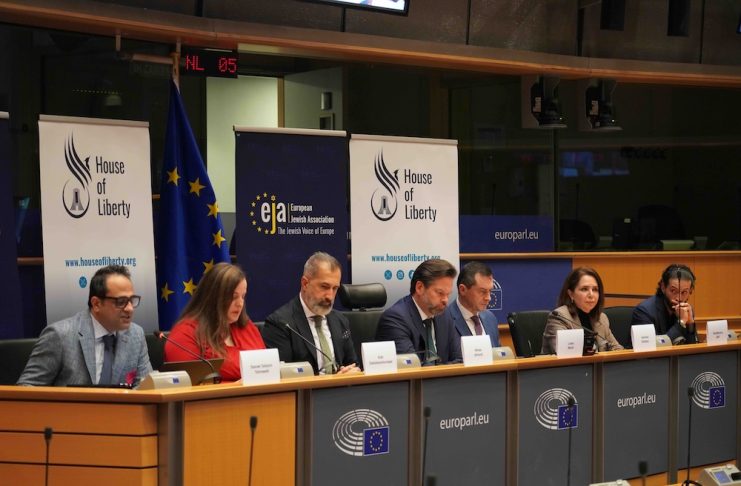
European Parliament Hosts Key Conference on Iran’s Destabilising Alliances

European Parliament Hosts Key Conference on Iran’s Destabilising Alliances

Gary Cartwright - December 3, 2024
US weighs visa sanctions on EU officials over DSA

US weighs visa sanctions on EU officials over DSA

Indian Refiner Tightens Trade Conditions After Latest EU Sanctions on Russia

Indian Refiner Tightens Trade Conditions After Latest EU Sanctions on Russia

Europe’s campaign to loosen the grip of American technology giants is colliding with a familiar obstacle: Europe itself. As Brussels prepares a series of decisions that could reshape the continent’s digital economy, senior EU officials remain divided over how aggressively to favour European companies at the expense of US rivals. The debate has exposed tensions between the bloc’s ambitions for “technological sovereignty” and fears of economic retaliation from Washington. At stake are two strategically sensitive sectors — satellite communications and cloud computing — both viewed in Brussels as essential infrastructure for the next phase of Europe’s economy and defence architecture. On one front, European policymakers are deciding how to allocate valuable mobile satellite spectrum expected to underpin future direct-to-device services. The frequencies are likely to become critical for everything from emergency communications to military applications and remote connectivity. Reuters reported this week that Brussels is leaning towards a compromise under which most of the spectrum would be reserved for European groups, while still allowing limited access for foreign operators including Elon Musk’s Starlink and Amazon’s Kuiper project. A parallel battle is unfolding in cloud computing. The European Commission is expected next week to unveil proposals designed to reduce dependence on US hyperscale providers such as Amazon Web Services, Microsoft Azure and Google Cloud, which together account for roughly two-thirds of the global market. The move reflects a broader shift in European industrial policy. Since the pandemic and the war in Ukraine, Brussels has become increasingly concerned about strategic vulnerabilities arising from heavy reliance on foreign suppliers across sectors ranging from semiconductors to energy and defence. The rapid advance of artificial intelligence has only intensified anxieties over Europe’s relative technological weakness. Officials close to the discussions say advocates of a tougher line argue Europe cannot build globally competitive technology champions while continuing to leave critical infrastructure markets dominated by American firms. Among the leading proponents of a more assertive “Buy European” approach are Stéphane Séjourné, the EU’s industry commissioner, and defence commissioner Andrius Kubilius. Supporters of their position argue that Europe’s security environment and deteriorating geopolitical landscape demand a more protectionist industrial strategy. Yet resistance inside the Commission remains substantial. Henna Virkkunen, the Finnish commissioner responsible for technology policy, is said to favour a less confrontational approach centred on common regulatory standards rather than outright exclusion of non-European groups. According to officials familiar with the discussions, her more pragmatic position may ultimately prevail. The internal dispute illustrates a deeper European dilemma. The continent wants digital independence but remains deeply intertwined with US technology ecosystems. European businesses, governments and public services continue to rely heavily on American cloud infrastructure, software platforms and AI tools. Replacing them would require vast investment and years of industrial catch-up. That challenge is underscored by estimates showing Europe trails the US by roughly €1tn in technology-related investment. Business leaders also warn that an overly rigid localisation agenda could damage competitiveness. Critics argue that excluding American firms from procurement processes risks reducing innovation, raising costs and slowing Europe’s digital transition. Economists have additionally cautioned that defining what constitutes a genuinely “European” technology product may prove difficult in globally integrated supply chains. At the same time, political pressure for stronger action against Big Tech continues to build. Across Europe, regulators have already tightened oversight of online platforms through landmark legislation such as the Digital Services Act and Digital Markets Act. Brussels has imposed substantial fines on US technology groups over antitrust and privacy breaches, while several governments are pushing stricter rules around online harms, data sovereignty and AI governance. The cloud debate has acquired added urgency amid fears that geopolitical tensions could expose European governments and companies to strategic vulnerabilities. Some officials privately point to concerns that access to critical digital services could become entangled in future trade or diplomatic disputes with Washington. Those fears have been amplified by Donald Trump’s return to the White House and uncertainty over the future direction of transatlantic relations. The result has been a growing push in Paris, Brussels and other European capitals to build more autonomous technological capabilities. Still, few in Brussels believe Europe can fully disentangle itself from American technology in the foreseeable future. Instead, the likely outcome is a more selective form of digital protectionism: favouring European firms in strategically sensitive sectors while stopping short of outright exclusion of foreign competitors. For now, Europe’s effort to curb Big Tech’s dominance appears set to advance cautiously — shaped as much by internal political compromise as by any grand vision of sovereignty. The coming weeks may reveal whether Brussels is prepared to match its rhetoric on technological independence with Europe

European Stability in Crisis: The Shocking Shift in U.S. Alliances and Its Consequences

tariffs

Brussels Strikes at Putin’s War Chest With Tariffs on Russian Farm...

EU Global Editorial Staff - May 22, 2025
EU agrees €90bn Ukraine loan after Russian-assets plan stalls

EU agrees €90bn Ukraine loan after Russian-assets plan stalls

EU Global Editorial Staff - December 19, 2025
Alternative for Germany Calls for End to Russia Sanctions and EU Exit in Election Manifesto

Alternative for Germany Calls for End to Russia Sanctions and EU...

EU Global Editorial Staff - November 29, 2024
Merz Proposes European Contact Group to Coordinate Ukraine Peace Efforts

Merz Proposes European Contact Group to Coordinate Ukraine Peace Efforts

EU Global Editorial Staff - December 9, 2024
European Parliament

European Parliament Agenda, Week Commencing Sept 22nd, 2025: Forward-Looking Overview

Gary Cartwright - September 21, 2025
Footballer Turned President: What Mikheil Kavelashvili's Election Means for Georgia

Footballer Turned President: What Mikheil Kavelashvili’s Election Means for Georgia

EU Global Editorial Staff - December 14, 2024
ETTIC Leaders Outline Vision for Modernising EU-Turkey Trade Relations

ETTIC Leaders Outline Vision for Modernising EU-Turkey Trade Relations

EU Global Editorial Staff - November 27, 2024
Europe’s campaign to loosen the grip of American technology giants is colliding with a familiar obstacle: Europe itself. As Brussels prepares a series of decisions that could reshape the continent’s digital economy, senior EU officials remain divided over how aggressively to favour European companies at the expense of US rivals. The debate has exposed tensions between the bloc’s ambitions for “technological sovereignty” and fears of economic retaliation from Washington. At stake are two strategically sensitive sectors — satellite communications and cloud computing — both viewed in Brussels as essential infrastructure for the next phase of Europe’s economy and defence architecture. On one front, European policymakers are deciding how to allocate valuable mobile satellite spectrum expected to underpin future direct-to-device services. The frequencies are likely to become critical for everything from emergency communications to military applications and remote connectivity. Reuters reported this week that Brussels is leaning towards a compromise under which most of the spectrum would be reserved for European groups, while still allowing limited access for foreign operators including Elon Musk’s Starlink and Amazon’s Kuiper project. A parallel battle is unfolding in cloud computing. The European Commission is expected next week to unveil proposals designed to reduce dependence on US hyperscale providers such as Amazon Web Services, Microsoft Azure and Google Cloud, which together account for roughly two-thirds of the global market. The move reflects a broader shift in European industrial policy. Since the pandemic and the war in Ukraine, Brussels has become increasingly concerned about strategic vulnerabilities arising from heavy reliance on foreign suppliers across sectors ranging from semiconductors to energy and defence. The rapid advance of artificial intelligence has only intensified anxieties over Europe’s relative technological weakness. Officials close to the discussions say advocates of a tougher line argue Europe cannot build globally competitive technology champions while continuing to leave critical infrastructure markets dominated by American firms. Among the leading proponents of a more assertive “Buy European” approach are Stéphane Séjourné, the EU’s industry commissioner, and defence commissioner Andrius Kubilius. Supporters of their position argue that Europe’s security environment and deteriorating geopolitical landscape demand a more protectionist industrial strategy. Yet resistance inside the Commission remains substantial. Henna Virkkunen, the Finnish commissioner responsible for technology policy, is said to favour a less confrontational approach centred on common regulatory standards rather than outright exclusion of non-European groups. According to officials familiar with the discussions, her more pragmatic position may ultimately prevail. The internal dispute illustrates a deeper European dilemma. The continent wants digital independence but remains deeply intertwined with US technology ecosystems. European businesses, governments and public services continue to rely heavily on American cloud infrastructure, software platforms and AI tools. Replacing them would require vast investment and years of industrial catch-up. That challenge is underscored by estimates showing Europe trails the US by roughly €1tn in technology-related investment. Business leaders also warn that an overly rigid localisation agenda could damage competitiveness. Critics argue that excluding American firms from procurement processes risks reducing innovation, raising costs and slowing Europe’s digital transition. Economists have additionally cautioned that defining what constitutes a genuinely “European” technology product may prove difficult in globally integrated supply chains. At the same time, political pressure for stronger action against Big Tech continues to build. Across Europe, regulators have already tightened oversight of online platforms through landmark legislation such as the Digital Services Act and Digital Markets Act. Brussels has imposed substantial fines on US technology groups over antitrust and privacy breaches, while several governments are pushing stricter rules around online harms, data sovereignty and AI governance. The cloud debate has acquired added urgency amid fears that geopolitical tensions could expose European governments and companies to strategic vulnerabilities. Some officials privately point to concerns that access to critical digital services could become entangled in future trade or diplomatic disputes with Washington. Those fears have been amplified by Donald Trump’s return to the White House and uncertainty over the future direction of transatlantic relations. The result has been a growing push in Paris, Brussels and other European capitals to build more autonomous technological capabilities. Still, few in Brussels believe Europe can fully disentangle itself from American technology in the foreseeable future. Instead, the likely outcome is a more selective form of digital protectionism: favouring European firms in strategically sensitive sectors while stopping short of outright exclusion of foreign competitors. For now, Europe’s effort to curb Big Tech’s dominance appears set to advance cautiously — shaped as much by internal political compromise as by any grand vision of sovereignty. The coming weeks may reveal whether Brussels is prepared to match its rhetoric on technological independence with Europe

EU Pulls Back on Green Claims Directive — A Misstep or...

Gary Cartwright - October 14, 2025
Traineeships

MEPs Back New Rules to Clamp Down on Exploitative Traineeships Across...

EU Global Editorial Staff - October 8, 2025
EU Capitals Push Brussels Towards Tougher China Trade Defence

EU Targets Chinese Firms with New Trade Rules for Clean Technology

EU Global Editorial Staff - November 19, 2024
123...6Page 1 of 6
EU Global News
  • WORLD
  • Policy
  • Economics & Business
  • Human Rights
  • Environment
  • Science & Technology
  • Culture
  • Spotlight

About us

EU Global News is a trusted platform delivering in-depth analysis and up-to-date reporting on key global developments. Covering Policy & Governance, Economics & Business, Human Rights, Environment, Science, and Culture, we offer comprehensive insights across Europe and the world. With a focus on clarity and accuracy, we aim to inform and engage readers on the issues shaping our shared future.

X

Resources

  • About
  • Contact us
  • Privacy Policy

The latest

Iran’s Hormuz Demand Keeps Energy Risk Alive Despite Lower Oil Prices

Energy July 2, 2026
Oil eased after Qatar reported progress in US-Iran talks, but Tehran's insistence on recognised control and possible fees in the Strait of Hormuz leaves the central maritime dispute unresolved.

German Nord Stream Indictment Reopens Europe’s Most Sensitive Sabotage Case

Defence & Security July 2, 2026
Germany's indictment of a Ukrainian national brings the 2022 pipeline explosions closer to trial, moving a geopolitical controversy into a courtroom where evidence, wartime law and European energy politics will collide.

Russia turns to Indian petrol as refinery strikes force Moscow into fuel imports

Defence & Security July 2, 2026
Russia has begun importing petrol from India after Ukrainian...

© EU Global News 2024-2026 All Rights Reserved