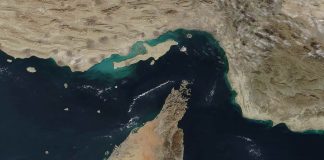
As the US-Iran ceasefire frays, Tehran is treating influence over the Strait of Hormuz as a central bargaining asset, moving the diplomatic contest from nuclear restrictions towards the security and governance of global energy shipping.
Iran’s effort to turn control over the Strait of Hormuz into a recognised bargaining tool marks a significant shift in its confrontation with the United States. The nuclear file remains central, but maritime leverage is increasingly determining the economic cost and urgency of diplomacy.
The strait carries roughly one fifth of globally traded oil and substantial liquefied natural gas volumes. Iran does not need to impose a durable formal closure to influence markets. Threats, inspections, attacks, mines or uncertainty over transit rules can be enough to make shipowners, crews and insurers alter behaviour.
Risk perception is itself leverage
EU Global previously reported that Iran’s demand for control over Hormuz kept energy risk alive despite lower oil prices. Renewed military exchanges make that demand more consequential because commercial operators now have evidence that de-escalation can reverse quickly.
Tehran’s leverage rests partly on geography. Iran controls the strait’s northern shore and can combine coastal missiles, drones, naval craft and political authority over its waters. It cannot lawfully claim unrestricted control over international passage, but it can make passage costly and dangerous.
That distinction explains why markets can react sharply without a declared blockade. A tanker turning back or an insurer withdrawing cover reduces effective capacity even when navigation remains legally open.
Nuclear diplomacy becomes maritime diplomacy
Traditional negotiations focus on enrichment, inspections, sanctions relief and the future of Iran’s nuclear programme. Hormuz adds a second negotiating arena with a different group of affected states.
Gulf exporters depend on the route. Asian buyers receive much of the oil and gas. European economies absorb the price consequences. Naval powers are drawn into protection and deconfliction even if they are not parties to the nuclear dispute.
This broadens Iran’s bargaining position but also its exposure. Disruption can alienate neighbouring producers and major customers whose support Tehran needs. A severe incident could produce a multinational security response that reduces Iranian room for manoeuvre.
Europe cannot separate security from energy
Europe has reduced direct dependence on some Gulf producers, but oil prices are global and LNG cargoes are fungible. If Asian buyers compete for Atlantic supplies because Hormuz traffic falls, European utilities and consumers pay more.
Shipping costs add another layer. War-risk premiums, longer waiting times and crew concerns move through freight rates, refinery margins and industrial input prices. Fertiliser and petrochemical markets are particularly exposed to Gulf gas and shipping.
The International Energy Agency’s oil-market reporting provides the wider supply context, but ordinary balances can be overwhelmed quickly by chokepoint risk.
The danger of miscalculation
Using maritime pressure as leverage requires calibrated escalation. A warning that frightens markets may strengthen Tehran’s negotiating position; an attack causing mass casualties or prolonged pollution may trigger retaliation and destroy diplomatic space.
The same problem faces Washington and its partners. Military escorts and strikes can protect navigation or deter attacks, but they can also create new encounters in a narrow and congested waterway.
The ceasefire’s fragility therefore makes Hormuz more than a supporting issue. It is becoming the mechanism through which Iran translates regional military power into global economic pressure.
Any durable US-Iran arrangement will have to address not only nuclear limits and sanctions, but predictable rules for shipping, deconfliction and the treatment of commercial vessels. Without that maritime settlement, apparent diplomatic progress can continue to be reversed by a single incident at sea.
Main Image: By Official Navy Page from United States of AmericaAlex R. Forster/U.S. Navy – USS Porter transits the Strait of Hormuz., Public Domain, https://commons.wikimedia.org/w/index.php?curid=22666149