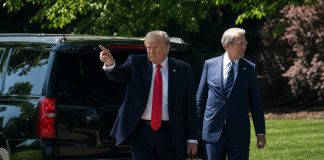
Sergei Lavrov’s claim that the West has declared war on Russia through Ukraine follows the EU’s decision to unblock a €90 billion loan for Kyiv, weakening Moscow’s assumption that European divisions could restrict Ukraine’s capacity to resist.
Russian Foreign Minister Sergei Lavrov has accused Western governments of waging war against Russia through Ukraine, describing Kyiv as the instrument of that confrontation. His remarks, reported by IANS, repeat a central Kremlin argument: that Russia is not primarily fighting Ukraine, but a Western coalition acting through Ukrainian territory.
The statement came shortly after the European Union approved a €90 billion loan for Ukraine, ending a two-month impasse caused by Hungary’s veto. According to Euronews, the first payment is expected “as soon as possible”, while The Guardian reported that the agreement followed Hungary’s decision to lift its objection after Ukraine resumed pumping Russian oil to Hungary and Slovakia.
For Moscow, the decision removes a political obstacle on which it had appeared to rely. The loan is intended to sustain Ukraine’s defence and state finances at a time when Russia continues offensive operations and missile and drone attacks. It also demonstrates that, despite internal disagreements, the EU remains capable of mobilising large-scale support for Kyiv.
Lavrov’s formulation is therefore best understood as both external messaging and domestic explanation. By presenting the conflict as a war imposed on Russia by the West, the Kremlin avoids acknowledging the origin of the war: Russia’s annexation of Crimea in 2014, its support for armed conflict in Donbas, and its full-scale invasion of Ukraine in February 2022. The issue is not whether Western support is important to Ukraine. It clearly is. The issue is whether such support changes the fact that Russia began the war.
The same narrative also allows Moscow to explain why a campaign that was expected to deliver rapid political results has instead become a prolonged war of attrition. Western military, financial and intelligence support has strengthened Ukraine’s capacity to resist, but that support followed Russia’s aggression; it did not precede or cause it.
Lavrov’s comments also come as Russia faces increasing pressure on its energy infrastructure. Reuters has reported renewed Ukrainian attacks on Russian energy sites, including refineries and oil-related infrastructure. In a separate report, Reuters said a major fire at the Tuapse oil terminal had been brought under control after a Ukrainian drone strike earlier in April.
These attacks have direct economic relevance. Russia’s war effort depends heavily on revenue from energy exports, logistics and industrial supply chains. Ukrainian strikes on refineries, oil depots and ports are intended to reduce Russia’s capacity to finance and sustain its military operations. For Moscow, however, such developments are politically easier to explain as evidence of a Western campaign than as the consequence of Russia’s own war against a neighbouring state.
The broader European debate is also shifting. Polish Prime Minister Donald Tusk has warned that Europe must prepare for the possibility of Russian aggression against NATO territory and questioned whether the United States would remain fully reliable in such a scenario. Reuters reported that Tusk called for the EU to become a more serious defence actor, reflecting wider concern about Europe’s dependence on Washington.
At the same time, Russia’s military capacity for a wider conflict appears constrained by the war in Ukraine. Its manpower, equipment, logistics and command structures remain heavily committed to the Ukrainian front. In that sense, Ukraine’s resistance has reduced Russia’s immediate ability to threaten other European states, even as Russian officials continue to use language suggesting confrontation with the West.
Lavrov’s argument contains an internal contradiction. If Russia were merely defending itself against the West, it would not need to occupy Ukrainian territory, annex Ukrainian regions, or demand limits on Ukraine’s sovereignty. The Kremlin’s stated grievance is Western support for Kyiv, but the underlying issue remains Ukraine’s refusal to accept Russian control over its territory and political future.
The EU loan decision therefore carries significance beyond financial support. It signals that Moscow’s expectation of European fatigue has not produced the outcome it wanted. Hungary’s earlier obstruction delayed the package, but did not prevent it. Ukraine remains dependent on external assistance, but Russia has failed to isolate it diplomatically or financially.
Lavrov’s latest accusation is less a sign of Western escalation than an indication of Russian irritation at the failure of its pressure strategy. The West did not declare war on Russia by assisting Ukraine. Russia began the war by attacking Ukraine. The political and economic consequences now faced by Moscow follow from that decision.