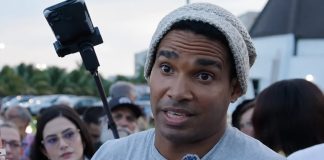
It was, by the standards of modern politics, almost banal: a social media post, a sharp remark, a tone that would scarcely raise an eyebrow in London, Paris or Washington. Yet in Turkey it was enough to bring police to investigative journalist Alican Uludag’s door.
The detention this week of investigative journalist Alican Uludag over allegations of “insulting” President Recep Tayyip Erdogan is less a singular outrage than a ritual. The choreography is now familiar: a late-night visit, confiscated devices, a prosecutor invoking Article 299 of the penal code, and a weary statement from press freedom organisations warning that another line has been crossed — though in truth the line vanished years ago.
The journalist, a veteran of Turkey’s embattled media landscape, was taken into custody after comments posted online that authorities deemed offensive to the head of state. The charge — insulting the president — carries potential prison time and has become one of the most potent tools in Ankara’s legal arsenal against dissent.
In theory, Turkey remains a republic with elections, a parliament and a constitution guaranteeing expression. In practice, criticism of the presidency increasingly resembles a legal hazard. Since Erdogan assumed the presidency in 2014, tens of thousands of investigations have reportedly been launched under the insult statute. Cartoonists, teenagers, academics and even schoolchildren have found themselves facing prosecutors for words that would elsewhere be dismissed as political satire.
The government’s defenders insist the matter is straightforward. Every democracy, they argue, protects individuals from defamation, and a president is no exception. To them, the outrage in Western capitals reflects hypocrisy — European states also criminalise certain forms of speech. Yet this defence collapses under scrutiny. The distinction lies not in the existence of law but in its application.
In most democratic societies, insult laws are rarely used against political criticism. In Turkey they have become almost synonymous with it.
The latest arrest is particularly telling because it concerns a journalist. Turkey once possessed a vigorous and argumentative press. Istanbul’s newsrooms in the 1990s were loud places — argumentative editors, rival columnists trading barbs, newspapers representing sharply different political traditions. Today, many of those institutions exist only in memory. Ownership has shifted toward business conglomerates aligned with government interests, and editorial caution has replaced editorial rivalry.
What remains is a shrinking cadre of independent reporters operating in a space that grows narrower by the month. Social media briefly offered a workaround: when newspapers could not publish, individuals could speak. But the state has followed the conversation online. Turkey’s internet regulations, expanded repeatedly in recent years, allow authorities to compel platforms to remove content and identify users. The boundaries of permissible speech are therefore no longer confined to the printed page; they extend into private phones and late-night tweets.
International reaction has been predictable. Rights groups and European officials have expressed concern that criminal prosecutions for insulting the president chill public debate. Turkey, however, has heard such criticism before and long ago decided it could absorb it. Ankara’s relationship with Europe — transactional, strategic and often tense — is resilient enough to survive periodic disputes over civil liberties.
Indeed, Erdogan’s political durability partly explains the persistence of these prosecutions. For more than two decades he has dominated Turkish politics, surviving protests, corruption allegations, a coup attempt and economic turmoil. His supporters view him as the embodiment of national sovereignty, a leader who restored religious expression to public life and pursued an assertive foreign policy. To them, attacks on Erdogan are attacks on Turkey itself.
This conflation of person and state lies at the heart of the problem. A presidency in a healthy democracy is an office; in Turkey it increasingly resembles an institution fused with a single individual. Insulting the leader becomes, in official logic, undermining national unity.
Yet the paradox is unavoidable. The more speech is policed, the more fragile authority appears. Confident governments tolerate ridicule. Only insecure ones prosecute it.
Turkey is not a totalitarian state. Elections still matter, opposition parties campaign and the country remains deeply connected to Europe economically and culturally. But it is drifting toward a model in which criticism carries legal risk — not always imprisonment, but enough uncertainty to encourage silence.
For journalists, the consequences are obvious. Reporting becomes calculation. Commentary becomes coded. The profession shifts from questioning power to anticipating its reaction.
The detained reporter may ultimately be released pending trial, perhaps fined, perhaps given a suspended sentence. The immediate drama will fade. Yet the deeper effect endures: a warning delivered not only to one individual but to thousands of others who watch and understand the message.
The story, therefore, is not merely about a man and a tweet. It is about a political culture increasingly intolerant of dissent, and a legal framework that transforms wounded pride into prosecutorial action. In the long run, a state that prosecutes mockery risks something more dangerous than criticism — it risks irrelevance. For a government that cannot endure words must ultimately fear ideas, and ideas, unlike journalists, cannot be detained.
Turkey Engulfed in Unrest as Authorities Crack Down on Journalists