European rescue teams have joined the search for survivors after Venezuela’s twin earthquakes, but difficult access and a narrowing rescue window are testing whether the EU’s civil-protection machinery can deliver rapidly in a country with fragile institutions and strained international relations.
European rescue specialists are working alongside Venezuelan and international teams after twin earthquakes devastated communities along the country’s northern coast, as hopes of finding more survivors diminish and the scale of reconstruction becomes clearer.
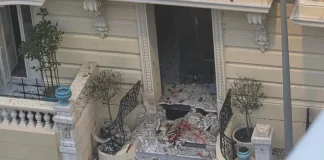
Five days after the earthquakes, Venezuela’s government put the death toll above 1,450, while a magnitude 4.6 aftershock added to fear in damaged communities. Search teams were still working through collapsed structures as the period in which trapped people are most likely to survive narrowed sharply.
The figures remain provisional and should be treated as such. Communications are disrupted, some communities are difficult to reach and casualty reports may change as local and national records are reconciled.
For Europe, the crisis is also a test of a capability that receives less attention than sanctions or diplomacy: the ability to mobilise specialised civilian assistance beyond the EU’s borders and convert offers from several governments into a coherent operation on the ground.
Europe activates a shared emergency system
Venezuela requested assistance through the EU Civil Protection Mechanism after the earthquakes. Eight member states offered search-and-rescue, medical and technical support: Czechia, France, Germany, Italy, Luxembourg, the Netherlands, Portugal and Spain.
The European response has involved more than 520 personnel, according to initial deployment figures, as well as equipment intended for urban search and rescue, emergency medicine and technical assessment. The mechanism allows Brussels to coordinate national offers, co-finance transport and connect teams with local authorities and international relief structures.
That coordination matters after a major earthquake. A rescue team is useful only if it reaches the right location with transport, communications, fuel, interpreters and an operational base. Sending multiple national units without common tasking can create congestion at airports and duplicate work while isolated areas wait.
The rescue window is unforgiving
Specialist teams often refer to the first 72 hours as the critical period for finding people alive beneath rubble. Survivors can be located later, but dehydration, injury, heat and unstable structures reduce the probability with every day.
International rescuers working in La Guaira described the difficult balance between urgency and crew safety. Repeated aftershocks can destabilise buildings that have already partially collapsed, exposing rescuers and residents to further danger.
European teams therefore bring more than manpower. Dogs, acoustic equipment, cameras, structural engineers and medical personnel can help local responders search more precisely. Yet advanced equipment cannot eliminate delays caused by damaged roads, limited lifting machinery or uncertainty over where people remain missing.
State capacity shapes disaster mortality
The earthquakes struck a country already dealing with weak public services, infrastructure deterioration and a prolonged political and economic crisis. Those conditions do not cause an earthquake, but they influence how many people survive it.
EU Global’s initial report on Venezuela’s catastrophe documented the scale of the destruction and national grief. The European deployment is a distinct follow-up: it shifts attention from the first casualty reports to the capacity of outside responders to reach survivors and support reconstruction.
Building quality, emergency communications, hospital resilience and the availability of heavy equipment all determine whether the response reaches communities quickly. A central government may announce national figures and aid priorities while municipal responders struggle with electricity, water and transport failures.
International assistance must also navigate political mistrust. European governments have maintained pressure on Venezuelan authorities over democratic standards and human rights. Disaster response requires practical cooperation with the same state institutions without turning humanitarian assistance into political recognition or allowing aid distribution to become a tool of patronage.
Civil protection has become foreign policy
The EU Civil Protection Mechanism was created to pool capabilities that no government may be able to provide alone during a major emergency. Its deployments abroad have increasingly become a form of public diplomacy.
Rescue teams carrying national and EU markings create a visible European presence at a moment when local communities need practical help. That can build trust more directly than a diplomatic statement. It also demonstrates that European external action includes civilian expertise, not only trade measures and political conditions.
But visibility creates accountability. Brussels and participating states should publish where teams were assigned, how quickly they arrived and what obstacles limited their work. The value of the mechanism cannot be measured solely by the number of personnel offered; it must be judged by lives reached and needs met.
Reconstruction will outlast the rescue phase
The immediate search will soon give way to shelter, sanitation, healthcare and reconstruction. A preliminary international assessment placed physical damage at about $6.7 billion, equivalent to roughly 6% of Venezuela’s economic output.
Those estimates are likely to change, but they show why the European role cannot end when rescue teams return home. Temporary housing, safe water, hospital repair and structural assessment will require sustained support and careful monitoring.
Europe will also need safeguards ensuring that assistance reaches affected communities impartially. Working through UN agencies, trusted humanitarian organisations and transparent local partners may reduce the risk of diversion while preserving operational access.
The Venezuela response is therefore a test on two levels. The first is whether European civil-protection teams can overcome distance, damaged infrastructure and political friction during the narrow rescue window. The second is whether the EU can remain engaged after public attention moves on.
Emergency response is now part of Europe’s international credibility. Its success will be measured not by the activation announcement in Brussels, but by what reaches Venezuelan communities after the cameras and rescue aircraft have left.